Triton: plumes above an icy moon
A sequence of Voyager 2 images from 1989 captured an active dark plume on Triton, Neptune's largest moon.
2026-09-24 · NASA/JPL
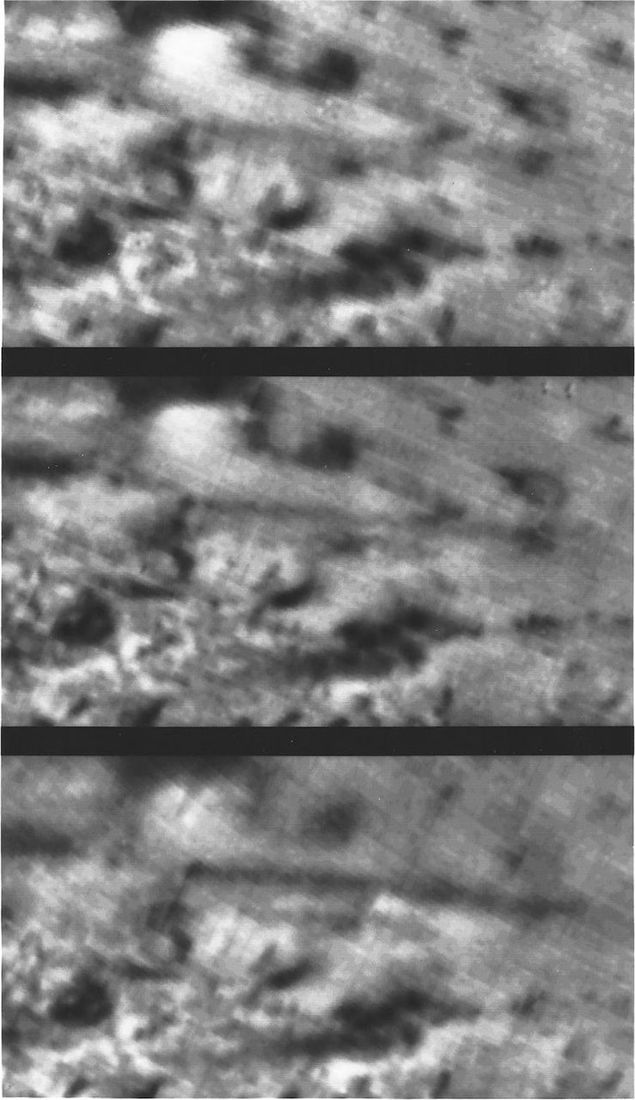
Three frames, not one instant
NASA's three images were taken on 26 August 1989 at intervals of about 45 minutes. Dark material rises roughly eight kilometres above the surface and drifts about 150 kilometres downwind. The plume's shadow is visible in the last frame.
What the sequence establishes
Changes between the frames show a real event in Triton's thin atmosphere. Voyager 2 therefore provided direct evidence of activity on this very cold moon. Calling the feature a geyser describes its appearance; the images alone do not identify the exact energy source below the ice.
A possible mechanism
One NASA hypothesis is that sunlight warms dark particles trapped in nitrogen ice. Rising gas pressure may then force fine material through a vent. This is an explanation for the observation, not a direct measurement beneath the surface.