The heliosphere and interstellar space
Both Voyagers crossed the Sun’s plasma boundary in different directions, but gravitationally bound Solar System objects extend much farther.
Facts verified 30 Aug 2026 · NASA — Interstellar Science ↗
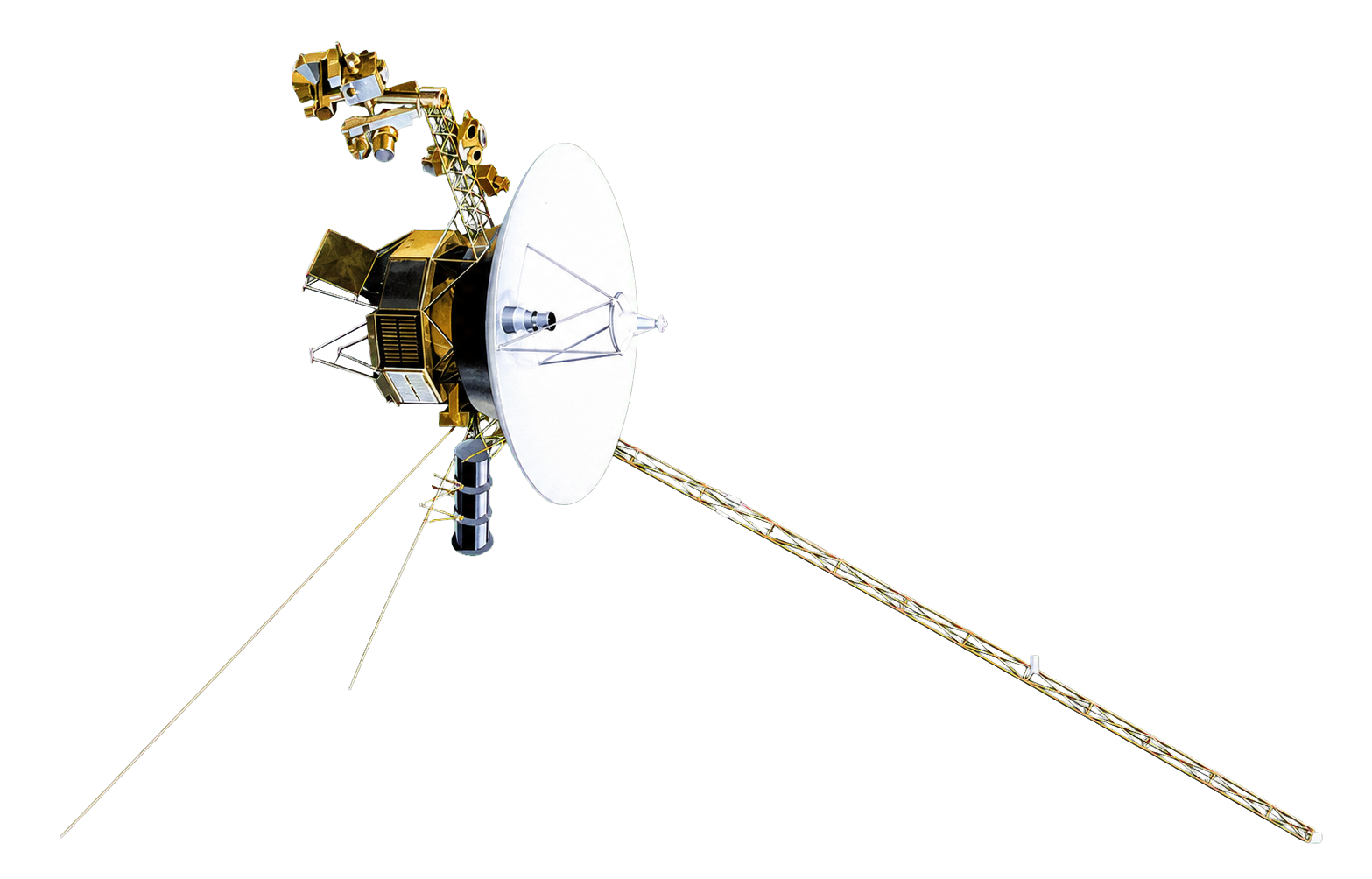
The heliosphere is not a fixed sphere
The solar wind carries charged particles and magnetic field outward, creating the heliosphere. Its shape and boundary respond to solar activity and the surrounding interstellar medium. A termination shock slows the supersonic solar wind; the heliosheath lies between that shock and the heliopause.
Evidence: NASA — Interstellar Science ↗ · NASA — Voyager FAQ ↗
Termination shock and heliopause
Voyager 1 crossed the termination shock on 16 December 2004 and the heliopause on 25 August 2012. Voyager 2 crossed the shock on 30 August 2007 and the heliopause on 5 November 2018. Their different routes show that the boundary is neither perfectly symmetric nor fixed.
Evidence: NASA — Voyager 1 ↗ · NASA — Voyager 2 ↗ · NASA — Interstellar Science ↗
Particles, magnetic field and plasma density
Voyager 1’s plasma instrument was unavailable, so the team used sharp changes in heliospheric particles, galactic cosmic rays and magnetic field. Plasma-wave measurements later revealed the denser external plasma and confirmed that the crossing had occurred in August 2012.
A direct plasma measurement, but not the gravitational edge
Voyager 2’s working PLS measured a steep drop and then the disappearance of solar-wind flow on 5 November 2018. Crossing the heliopause means entering interstellar space by the plasma definition. The Oort Cloud remains far ahead; NASA estimates centuries to its inner edge and tens of thousands of years to pass through it.
Evidence: JPL — Voyager 2 enters interstellar space ↗ · NASA — Voyager FAQ ↗
Related topics
These guides use the same evidence rules and primary sources.
Where the Voyagers are heading
Escape trajectories, directions, future stellar approaches, the Oort Cloud and the uncertain future of communications.
Open article →Voyager discoveries at the planets
Volcanoes on Io, Saturn’s rings and Titan, Uranus’s moons and magnetic field, Neptune and Triton.
Open article →How Voyager communicates with Earth
How NASA sends commands to Voyager and receives data through the Deep Space Network, radio bands, data rates and signal delay.
Open article →Article sources
Factual statements use the NASA and JPL primary sources below. Changing operational facts are dated.