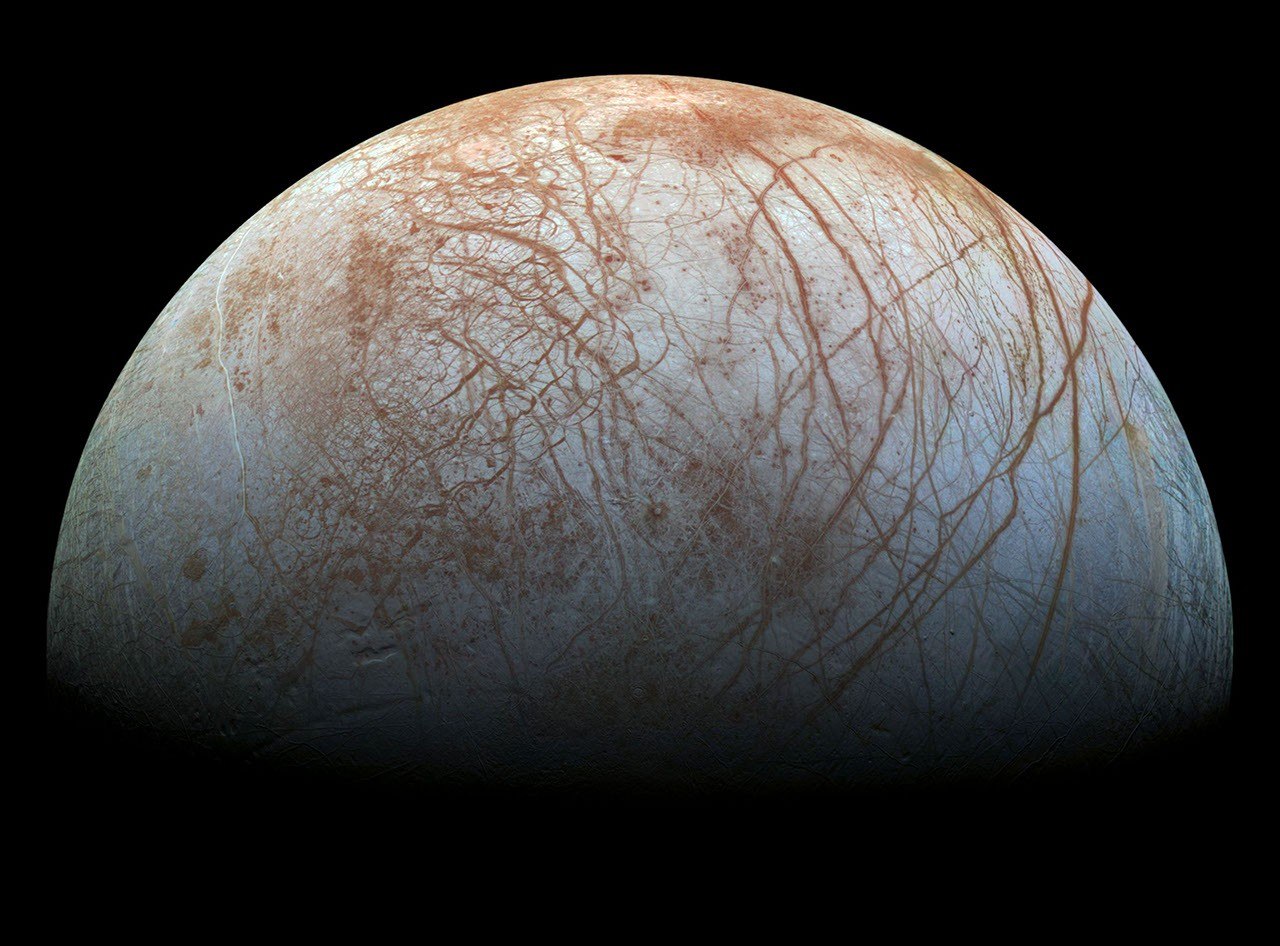
Europa
Moon of Jupiter
Galileo’s magnetometer found that Europa responds to Jupiter’s changing magnetic field. The measured response is consistent with a conductive layer beneath the ice. One of the strongest explanations is a deep ocean of salty water.
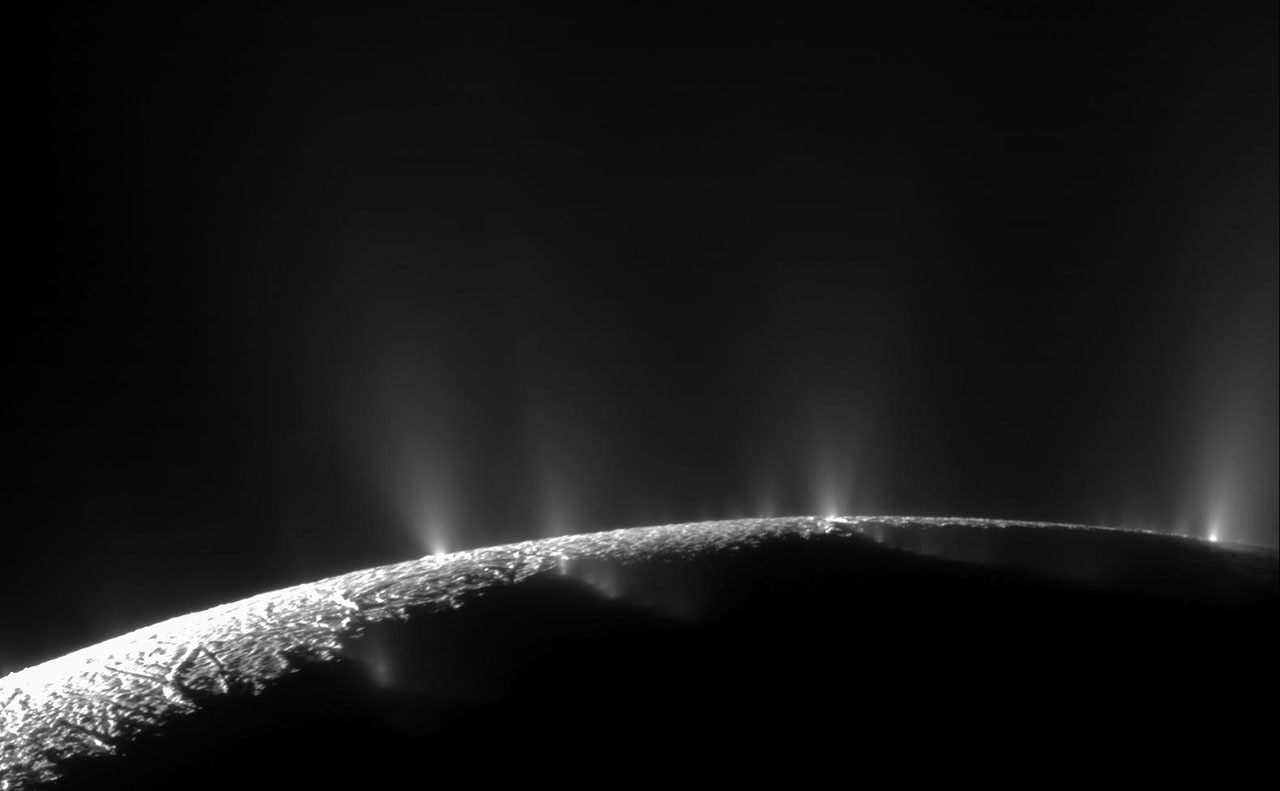
Enceladus
Moon of Saturn
Cassini flew through the plumes and measured their gas and ice grains directly. It found salts in the grains. Measurements of the moon’s slight wobble also showed that the icy shell is not attached rigidly to the interior, strong evidence for a global ocean.
Two ways to investigate a hidden ocean
Much of the evidence for Europa’s ocean comes from geophysical measurements. At Enceladus, Cassini could also sample material escaping from the moon into space. Both approaches help scientists work out where liquid water may be and what it is like.
What Europa Clipper will investigate
During repeated flybys the REASON radar will probe the properties and internal layers of the ice. A magnetometer, used with measurements of the surrounding plasma, will investigate electrical conductivity below the surface. The results will help assess whether environments on Europa could support life.