Cassini hands over
Huygens travelled to Saturn aboard Cassini. It separated on 25 December 2004 and headed toward Titan on its own. Titan’s atmosphere slowed it sharply, and parachutes gave the probe about two and a half hours to sample the air and photograph the terrain. Cassini collected the data and later relayed it to Earth.
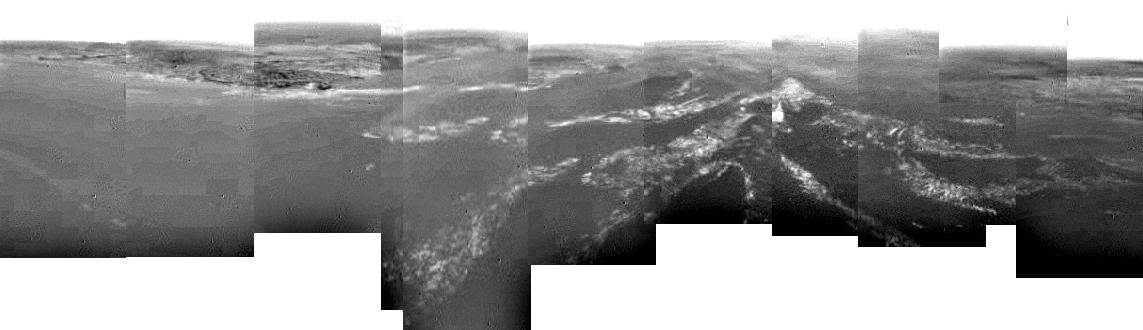
What the descent revealed
Dark branching channels cut through brighter uplands. They run toward a darker area where Huygens landed. Their shape is evidence that a flowing liquid carved the terrain. On cold Titan, that liquid could have been methane.
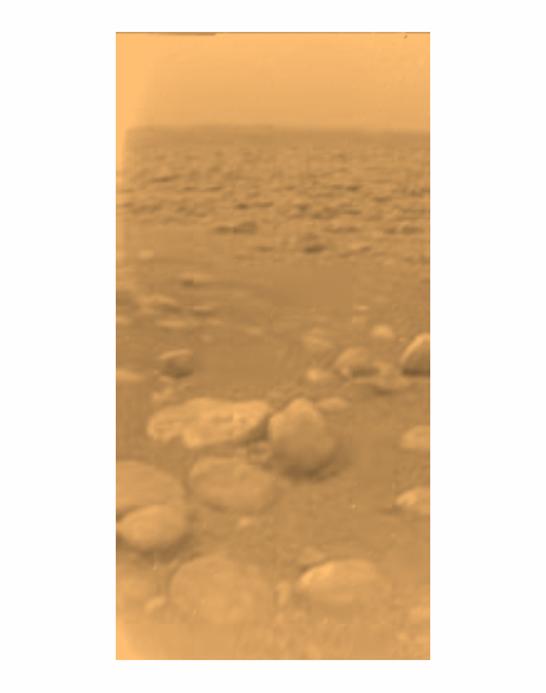
What Huygens found on the ground
The camera saw rounded pebbles that scientists interpreted as pieces of water ice. Other instruments probed material at the landing site that behaved somewhat like damp sand. Cassini received data from the surface for about 72 more minutes.